Fashion Show: Makeup, Dress Up
- 4.6
- Rating
- 100.00M
- Installs
- Free
- Price

 Analysis by App-foxy
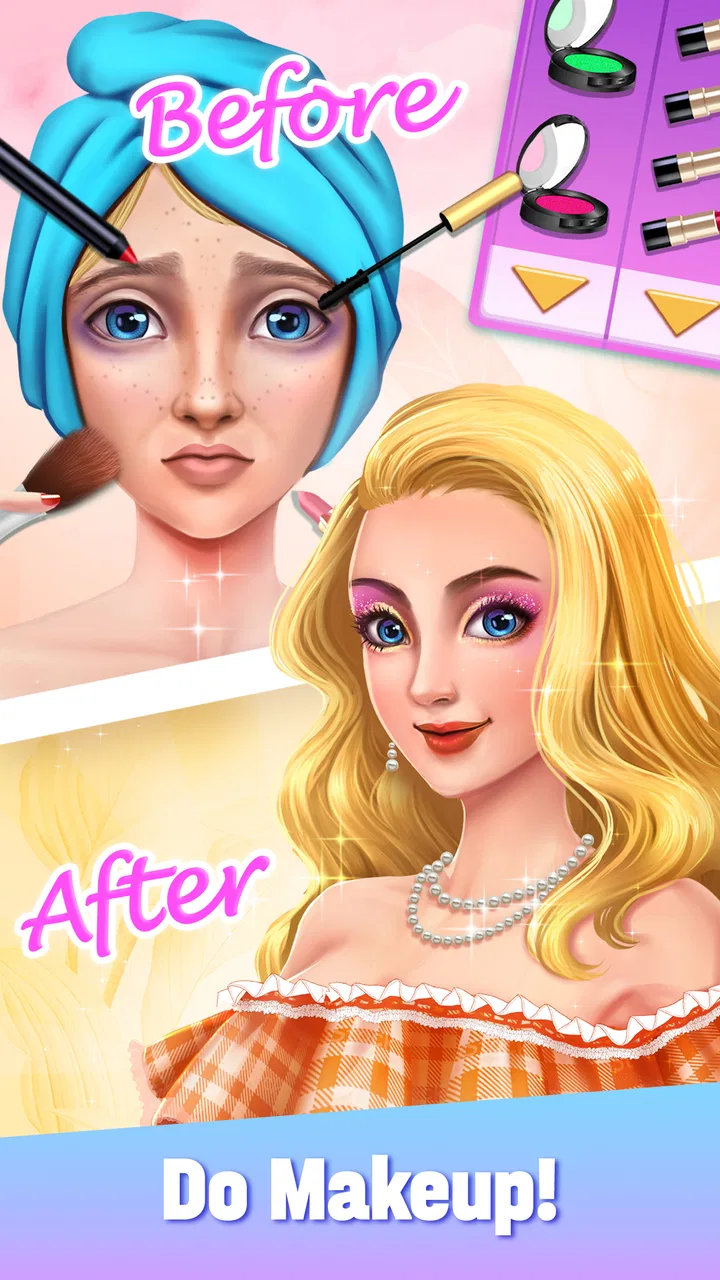
Fashion Show: Makeup, Dress Up is the kind of simulation game I open when I want something light, visual, and easy to understand within a few seconds. I choose a model, work through a makeover, assemble an outfit, and judge the finished look as a complete style rather than as one isolated item. That simple loop makes it approachable, but there is more to getting satisfying results than tapping the most colorful clothes first. The game rewards a repeatable order of decisions, patience with the available choices, and a willingness to treat makeup, hair, clothing, and accessories as parts of one design.
Developed by Dress Up Games for Girls, it is free to start and aimed at Everyone. Its fashion-styling focus places it firmly in the casual simulation space, rather than in the more demanding world of competitive strategy or narrative role-playing. The game has been available since September 7, 2020, and its current version is 3.5.5. It runs on Android 8.0 or later, so it is suitable for many older phones as well as newer devices.
The large audience is easy to understand: the game has passed 100 million installs and holds a 4.6 average from around 1.2 million ratings. Those figures do not automatically make it perfect, but they do indicate that the basic makeover-and-outfit formula has broad appeal. After spending time with it, I see it as best for players who enjoy visual experimentation in short sessions and do not need a deep story, complex controls, or a highly competitive fashion system.
You May Also Like

 AccuWeather: Weather Radar
AccuWeather Review: A Quick, Clear Forecast for Everyday Decisions
For everyday plans, the best forecast is the one you can understand quickly. AccuWeather makes rain timing, radar, and local conditions easy to act on, with a few trade-offs.

 Hill Climb Racing
Why Hill Climb Racing Still Turns Crashes Into One More Run
A tiny car, a bumpy hill and one more upgrade: Hill Climb Racing keeps resurfacing because its simple chaos makes every near-miss feel personal.

 AliExpress - Shopping App
AliExpress Makes Global Shopping Feel Personal, but Shoppers Bear the Risk
AliExpress turns a global marketplace into a pocket-sized discovery engine. Its reach is useful, its shopping loop compelling, and its trade-offs easy to miss.

 Lords Mobile: Kingdom Wars
Lords Mobile Is a Kingdom-Building Routine, Not a Quick Match
A case-by-case verdict on the building, battles, device demands, and social commitments that make Lords Mobile rewarding for some players and exhausting for others.

 PDF Scanner app - TapScanner
TapScanner Makes Paperwork Easier to Capture, Check, and Share
TapScanner makes scanning with a phone feel less like a rescue operation and more like a dependable step in getting work done. Its capture tools are useful, though not flawless.

 Block Blast!
 Shows How Much a Puzzle Game Can Leave Out
A quiet grid game shows why puzzle players increasingly value instant clarity, repeatable skill and low-pressure play—and where the genre still needs to catch up.
More From Our News Desk
View All News


Building a reliable styling workflow
I get more consistency from a workflow that narrows the choices before I start fine-tuning. In this section, I focus on how I establish a visual direction, choose an anchor, and check the finished combination without turning a quick styling round into a long edit. That foundation also makes it easier to adapt play to the device and the time I have.
Start with the face, not the wardrobe
My most useful habit is to begin with the makeover stage before choosing the final outfit. It is tempting to pick a dramatic dress immediately, but that often makes the later decisions feel disconnected. I first look at the model’s overall appearance, then work through makeup and hair with the mood I want in mind. A softer face usually gives me more freedom with clothing, while a stronger makeup choice can become the central idea that the rest of the look needs to support.
This order also prevents a common beginner mistake: selecting every striking option simply because it is attractive on its own. A bright lip, elaborate hairstyle, bold dress, and large accessory may all look appealing separately, yet together they can compete for attention. I get more consistent results by choosing one dominant element and allowing the other parts to frame it. In a game built around appearance, restraint is surprisingly useful.
Use a three-pass approach
For everyday play, I use three passes. The first is broad: I decide whether the look should feel elegant, playful, relaxed, or dramatic. The second is practical: I match colors and shapes across the face, hair, clothing, and accessories. The third is a cleanup pass, where I remove anything that feels excessive. This takes only a little longer than random tapping, but it gives each choice a reason.
The cleanup pass is especially valuable when the game presents several attractive options. Instead of asking whether an item is pretty, I ask whether it improves the complete look. If the answer is no, I leave it out. That mindset turns the experience from simple dress-up into a small design exercise, which is where I think the simulation label makes sense.
Think in color families
I do not try to match every shade exactly. That can make the process slow and overly rigid. Instead, I group choices into broad color families. Warm colors can support one another, cool colors can create a calmer result, and neutral pieces can give a busy combination somewhere to rest. When I choose a statement garment, I usually repeat one small visual detail elsewhere rather than copying the entire color everywhere.
For example, if the main clothing choice has a vivid accent, I may echo that accent in makeup or an accessory while keeping the rest quieter. This creates a connection between the parts without making the model look covered in one tone. It is a simple technique, but it is one of the clearest ways to make a result feel intentional.
Make the final screen a decision point
I treat the finished presentation as a chance to inspect the whole result, not merely as confirmation that I have completed the level or styling sequence. I look for visual balance: is the face still visible, does the hairstyle compete with the clothing, and does an accessory add character or just clutter the image? This matters for players who enjoy creating screenshots or showing a completed style to someone else.
The game is not a professional design tool, so I would not expect precise editing or unlimited control. Still, pausing before the final choice makes the available options feel more meaningful. The strongest results often come from a coherent combination of ordinary pieces rather than from selecting the most elaborate item in every category.
Settings and habits that make sessions smoother
A smooth session depends as much on the player’s surroundings as on the styling sequence. I’ll look at practical habits for managing interruptions, purchase decisions, and repeated touch choices, while keeping expectations realistic for a casual phone game. From there, it is easier to see how returning players can make familiar rounds feel less repetitive.
Check the practical basics first
There is no reason to turn a casual fashion game into a technical project, but I recommend checking the device before a longer session. The minimum operating system is Android 8.0, and keeping the phone’s software reasonably current can help avoid compatibility surprises. I also prefer to close demanding apps before playing on an older device, especially when I want to move through several makeover rounds without interruptions.
Because the game is free, I would also decide in advance how I want to handle optional spending. In-app purchases range from $0.99 to $49.99 per item. That is a wide enough range that a family should discuss purchase habits before handing the device to a child. The Everyone age rating makes the game broadly accessible, but age suitability and spending boundaries are separate questions. I would use the device’s purchase controls and keep expectations clear.
Choose a session length that fits the game
I find the game works better in short, focused sessions than in a long attempt to exhaust every available choice. A quick round is enough to experiment with a new color combination or hairstyle. Longer sessions can still be enjoyable, but repetition becomes more noticeable when I stop making deliberate styling decisions and simply choose the next appealing item.
My preferred routine is to play one round with a clear theme, then take a short break before trying another direction. This keeps the game from becoming a blur of similar outfits. It also helps me notice which choices I genuinely like instead of relying on the excitement of constant new selections.
Use the interface as a visual checklist
Rather than tapping through categories without a plan, I use each section as a checklist. I decide the face direction first, then hair, clothing, and finishing details. The exact order can vary, but keeping a consistent sequence reduces backtracking. If I change the clothing late, I revisit only the parts that might conflict with it instead of rebuilding the entire look.
This is a small workflow improvement, yet it matters on a phone. Touch controls are convenient, but they are not as precise as a desktop editor. A repeatable sequence means fewer accidental changes and less time searching for a previous choice. Players who find dress-up games overwhelming may appreciate this structure because it limits the number of decisions happening at once.
Keep expectations realistic on older phones
The stated Android requirement is modest, but performance can still depend on the phone itself. On a device with limited storage or many background processes, I would avoid treating the game as a heavy multitasking companion. It is better suited to a focused play session than to switching constantly between several demanding apps.
I also would not judge the game by the standards of a console fashion title. Its appeal comes from quick visual decisions, not from cinematic presentation or a detailed simulation of clothing construction. That distinction helps set the right expectations before downloading it.
Faster patterns for repeat players
Once the basic sequence becomes familiar, I find it useful to spend less time reopening decisions and more time changing one deliberate element. This section considers flexible templates and small experiments that preserve variety without adding unnecessary steps. It also leads into the question of how much lasting challenge a dress-up simulation can offer.
Create a small set of personal templates
Experienced players can speed up decision-making by keeping a few mental templates. I use one for a soft, coordinated look, one for a high-contrast style, and one for a deliberately playful combination. These are not fixed outfits; they are starting points. When I begin with a template, I can spend more time experimenting with one unusual element instead of making every choice from nothing.
A template should remain flexible. If I always use the same hair with the same clothing style, the game quickly becomes repetitive. I change one major component each round, such as switching from a balanced color scheme to a bold accessory, so the familiar structure still leaves room for discovery.
Choose the anchor item early
One of the fastest ways to avoid indecision is to identify an anchor item. This might be the most distinctive clothing piece, a hairstyle, or a makeup detail. Once I have it, I select supporting elements that do not fight for equal attention. This is quicker than comparing every option against every other option, and it usually produces a cleaner result.
The important trade-off is that an anchor item can limit the rest of the styling. That is not necessarily a problem. Constraints make the round easier to manage, and they encourage more thoughtful combinations. If the anchor is too strong, I can always replace it rather than trying to rescue an unbalanced look with extra accessories.
Separate experimentation from completion
I get more from the game when I distinguish between two kinds of rounds. In a completion round, I make fast, coherent choices and move on. In an experimentation round, I intentionally test a combination that may not work. Mixing these goals can make the game feel frustrating because I may judge an unusual idea too quickly or waste time perfecting a routine look.
This separation is also useful for children. A child who wants to finish quickly can follow a simple template, while a child who enjoys creative play can spend time testing unusual makeup and clothing combinations. The same game can therefore support a quick activity or a more open-ended creative exercise, depending on how the player approaches each round.
Use repetition to learn visual balance
There is a practical lesson in repeating the same general style with different details. I begin to notice which combinations make the face disappear, which accessories overwhelm the clothing, and which colors remain readable together. The game does not need to explain these principles directly; repeated comparison makes them visible.
That is one of the less obvious strengths of this title. It can function as a gentle introduction to coordination and visual hierarchy, especially for players who enjoy seeing immediate results. It is not formal art instruction, and I would not present it as such, but it encourages the habit of evaluating a complete composition.
Where the simulation stops being deep
A dependable routine can make each round feel smoother, but it cannot add systems that the game does not contain. I’ll draw a clear line between the satisfaction of coordinating a look and the deeper progression, technical design, or competition some players may expect. That distinction helps explain who is likely to enjoy the game and when a different kind of fashion title would be a better fit.
It is a styling sandbox, not a fashion career game
The biggest limitation is the depth of the simulation. I would not choose this game if I wanted fabric management, budgeting, detailed character progression, a long story, or a serious competition system. The pleasure comes from creating appearances, not from managing a fashion business or mastering technical garment design.
That makes it a poor substitute for games built around strategy, resource management, or narrative goals. Players who need a strong sense of progression may enjoy the first sessions and then feel that the core loop is too similar from round to round. I think it is better understood as a casual creative activity than as a complete fashion simulation.
Free access comes with a spending decision
The free entry point is helpful, especially for anyone who wants to try the basic experience before committing. However, optional purchases can change how a player thinks about the available wardrobe. A child may see a desirable item and assume it should be bought to improve a result, while an adult may prefer to stay entirely within the free experience.
I recommend deciding on that boundary before playing rather than during an enthusiastic session. If you want a completely purchase-free environment, another game with no optional spending may be a better fit. If you are comfortable treating purchases as optional extras and supervising them, the free starting point makes this title easy to sample.
Broad accessibility does not mean universal appeal
The Everyone rating and simple controls make the game approachable, but accessibility in this sense does not guarantee that every player will enjoy it. Someone looking for fast action may find the pace too quiet. Someone who dislikes appearance-focused games may see the makeover loop as repetitive. Someone who wants precise control over every visual detail may find the available choices limiting compared with a dedicated creative editor.
I also would not recommend it as a replacement for social interaction. It can be fun to show a finished style to friends or use it as a shared decision-making activity, but the game itself is primarily a personal styling experience. Its strongest moments happen when the player enjoys the act of choosing, comparing, and refining.
Know when another option is better
For a very young player who wants uncomplicated dress-up, this game is an appealing starting point. For a player who wants more challenge, I would look toward a fashion title with explicit scoring, stronger progression, or more demanding objectives. For someone who wants to design original garments rather than combine presented options, a drawing or character-creation app would be more suitable.
The comparison is important because the game’s popularity can create unrealistic expectations. A large audience and a high average rating show that many people like the formula, but they do not turn a casual makeover loop into a deep creative suite. I enjoy it most when I accept its boundaries instead of asking it to provide systems it was never designed around.
My verdict after settling into the routine
Fashion Show: Makeup, Dress Up works because it makes visual creativity immediate. I can start with no preparation, make a few connected decisions, and see a complete character take shape. The best way to enjoy it is not to rush through every category, but to follow a simple workflow: establish the mood, choose an anchor, coordinate the supporting details, and remove anything that distracts from the result.
The game has a 4.6 average based on around 1.2 million ratings, along with roughly 8,100 written reviews, and that broad response matches my overall impression: it is polished enough as a casual activity to keep returning to, while still being limited in the ways that matter to experienced simulation players. I would recommend it to children, casual players, and anyone who likes makeover games as a relaxing creative break.
I would be more cautious with players who dislike optional purchases, want a substantial story, or expect advanced fashion mechanics. The free price makes trying it straightforward, but the in-app purchase range means families should set boundaries first. The Everyone rating makes it widely approachable, yet supervision around spending remains sensible.
My final recommendation is simple: download it if you want a friendly styling sandbox and are happy to create your own challenges. Use short themed sessions, keep a few flexible templates, and judge each look as a whole. The real strength is not endless complexity, but the satisfying habit of turning a handful of separate choices into one coherent fashion look.
For me, that is enough to make it worth keeping around for quick breaks. It will not replace a deeper fashion-management game or a full creative design tool, but within its intended space, it offers an accessible and enjoyable way to experiment with makeup, clothing, hair, and accessories. The developer’s focus is clear, and when I approach the game on those terms, the experience feels honest, easy to pick up, and surprisingly rewarding when a simple combination comes together.
FAQs for Fashion Show: Makeup, Dress Up
01What is Fashion Show: Makeup, Dress Up about?
Fashion Show: Makeup, Dress Up is a creative simulation game where players can explore their stylist skills by dressing up models in various outfits and applying makeup. The game offers a wide range of clothing and accessories to choose from, allowing players to mix and match looks for fashion shows and photo shoots.
02Is Fashion Show: Makeup, Dress Up free to play?
Yes, the game is free to download and play on both Android and iOS platforms. However, it contains in-app purchases that allow players to unlock additional clothing items, accessories, and special features. These purchases are optional and not necessary to enjoy the core gameplay experience.
03Does the game require an internet connection to play?
Fashion Show: Makeup, Dress Up can be played offline, making it convenient for users who may not always have access to the internet. However, an internet connection is necessary for downloading updates, accessing certain online features, and making in-app purchases when desired.
04What age group is Fashion Show: Makeup, Dress Up suitable for?
The game is designed for fashion enthusiasts of all ages, particularly targeting young teens and adults interested in style and creativity. It is rated for ages 3 and up, making it appropriate for a wide audience, though parental guidance is recommended for younger players due to in-app purchase options.
05Are there any community features in Fashion Show: Makeup, Dress Up?
Yes, Fashion Show: Makeup, Dress Up includes community features where players can share their creations with friends and other players. They can participate in fashion challenges and receive feedback. This social aspect enhances the gaming experience by fostering a creative community around fashion and style.
Pros
- Wide variety of outfits and accessories.
- User-friendly interface for easy navigation.
- Regular updates with new fashion trends.
- Engaging challenges to enhance creativity.
- Offline mode available for uninterrupted play.
Cons
- Contains in-app purchases that can be costly.
- Some ads may disrupt gameplay.
- Limited options in free version.
- Occasional bugs can affect performance.
- Requires internet for certain features.

Fashion Show: Makeup, Dress Up
Gallery